
The Ultimate LED Wall Guide: Everything You Need to Know About Digital Display Walls in 2026

Tips zu LED-Wall
19.02.2026
Einzelnes Blog-Bild

The global digital signage market, which includes LED walls, is growing continuously at an annual rate of 4.6% and is expected to reach over 14 billion USD by 2031. Are you familiar with the problem when important presentations or information don't get the attention they deserve? This problem is now a thing of the past with modern LED walls.

LED walls transform spaces into impressive experience centers while offering decisive advantages over conventional displays. Modern LEDs consume up to 50% less power than previous generations and are even more powerful. In fact, LED displays in 2026 easily achieve 6,000 to 10,000 nits, which means they remain perfectly visible even in direct sunlight. Additionally, professional LED displays are designed for an impressive lifespan of 100,000 hours – that's more than 11 years of continuous operation.

In this comprehensive guide, we explain everything you need to know about LED walls in 2026. We examine how they work, important selection criteria, technical innovations, and diverse applications. This gives you the knowledge needed to find the right LED wall solution for your specific requirements – whether for corporate environments, events, or public spaces.

Key Takeaways

LED walls revolutionize visual communication in 2026 through self-luminous pixels, modular construction, and impressive energy efficiency. Here are the most important insights for your purchasing decision:

Pixel pitch determines viewing distance: Optimal distance = 2x pixel pitch in meters (P2 = 2-3m, P6.67 = 11m)

Common cathode saves 20-40% energy: Modern LED walls consume up to 50% less power at higher brightness

Indoor needs 600-1500 nits, outdoor 5000-10000 nits: Brightness must be adapted to lighting conditions

100,000 hours lifespan: Equals 11+ years of continuous operation – significantly longer than LCD displays (40,000h)

Modular construction enables front service: Defective modules can be replaced from the front without needing rear access

Total costs: 1,500-5,000€/m² plus operation: Hardware costs vary depending on technology, outdoor 20-30% more expensive

The right LED wall selection depends on the location, viewing distance, and budget. Professional consulting helps avoid hidden cost traps and find the optimal solution for your specific requirements.

What is an LED Wall and How Does it Work?

__wf_reserved_inherit

An LED wall is one of the most modern display technologies we know today. But what exactly is behind this term? Essentially, it is a large-format display made up of many individual light-emitting diodes. This technology offers impressive visual results and versatile applications.

Basic Principle: Self-Luminous Pixels Instead of Backlighting

Unlike conventional LCD displays, which use permanent backlighting, LED walls operate on a completely different principle. In an LED wall, each individual picture element is self-luminous. These pixels consist of tiny light-emitting diodes arranged in the form of so-called SMDs (Surface-Mount Diodes) [1]. Each pixel is formed by the combination of red, green, and blue diodes, which together can represent the complete color spectrum.

The decisive advantage: If an area is supposed to appear black, the LEDs are completely switched off – power consumption drops to zero and the black level is absolutely [2]. With conventional LCDs, on the other hand, the backlighting remains active, which often results in milky gray instead of deep black.

Difference Between LED Wall and Conventional Displays

LED walls distinguish themselves in several important ways from classic displays:

  1. Image Quality: The combination of unique brightness and contrast values (often 10,000:1), authentic black, and glare-free image surface significantly surpasses conventional video walls [1].
  2. Viewing Angle: The angle at which images can be perceived in high quality extends to nearly 180° – significantly more than LCD displays [1].
  3. Lifespan: LED walls can achieve an impressive lifespan of up to 100,000 operating hours in 24/7 operation – significantly more than the average lifespan of an LCD display (about 40,000 hours) [1].
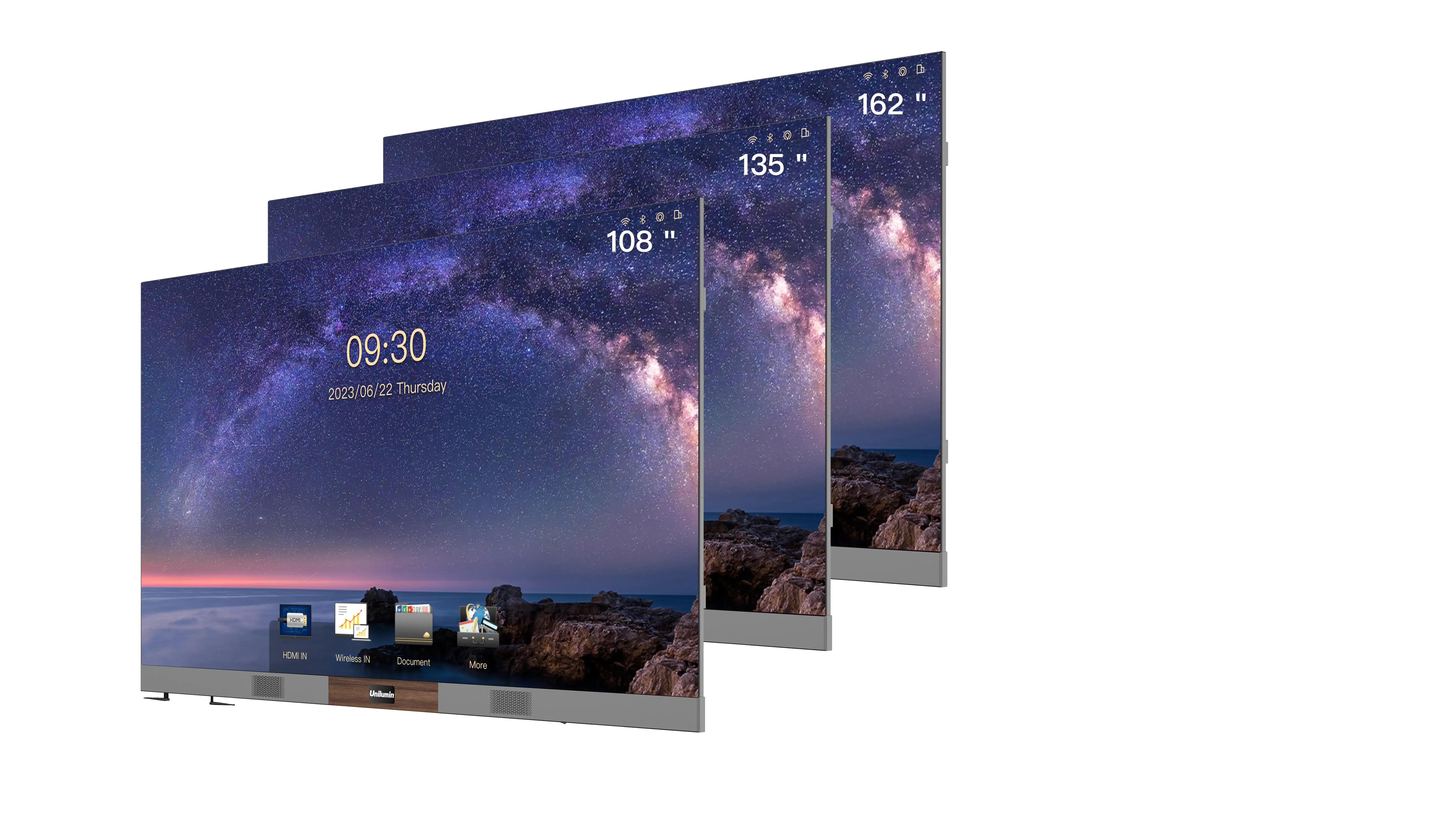
  4. Size and Format: While LCD displays are typically limited to about 100 inches screen diagonal and are inflexible in installation, LED walls easily enable diagonals of over 130 inches and are not restricted to the classic 16:9 format [1] [2].

Modular Construction: LED Wall Panels as Building Blocks

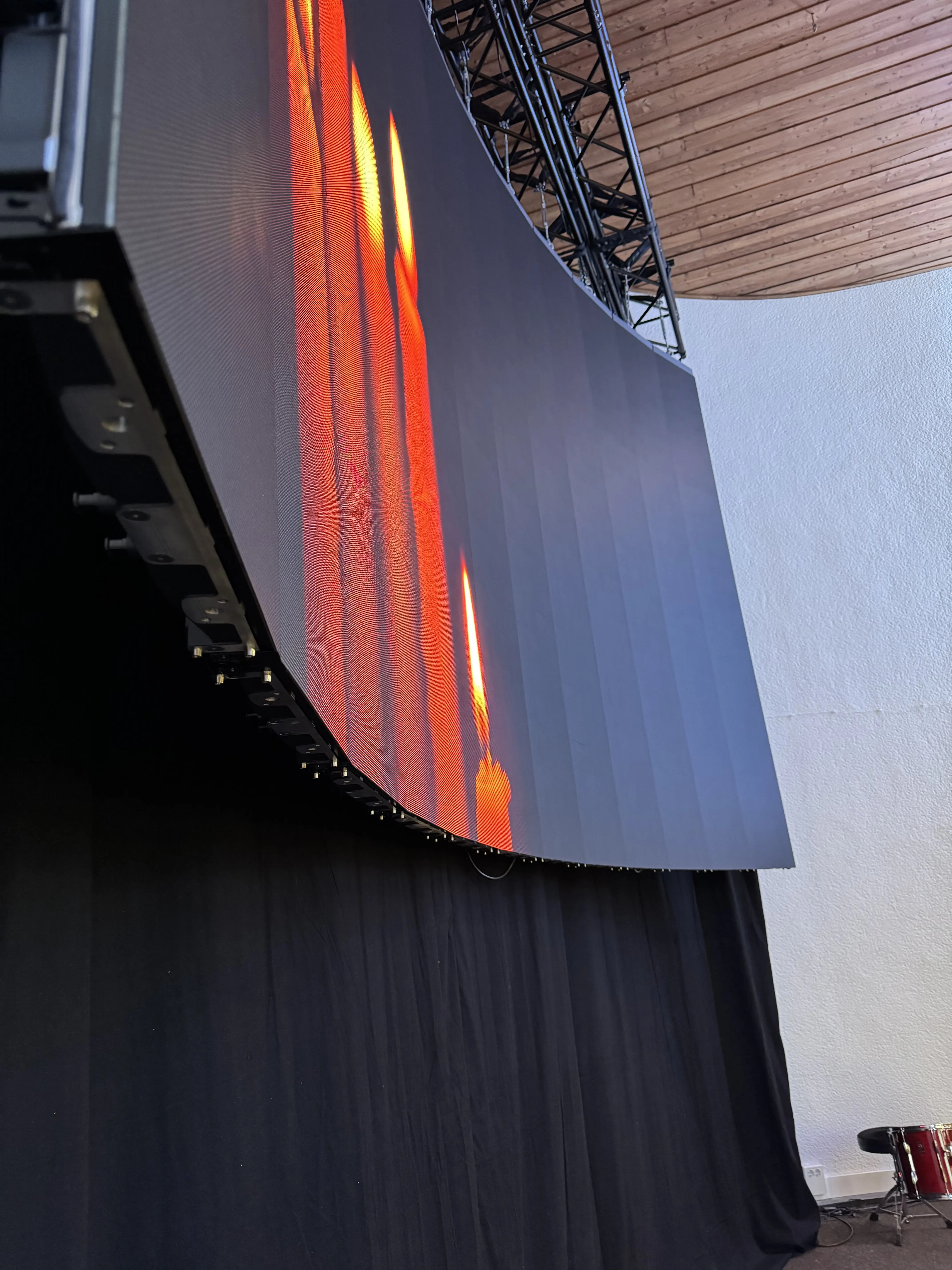
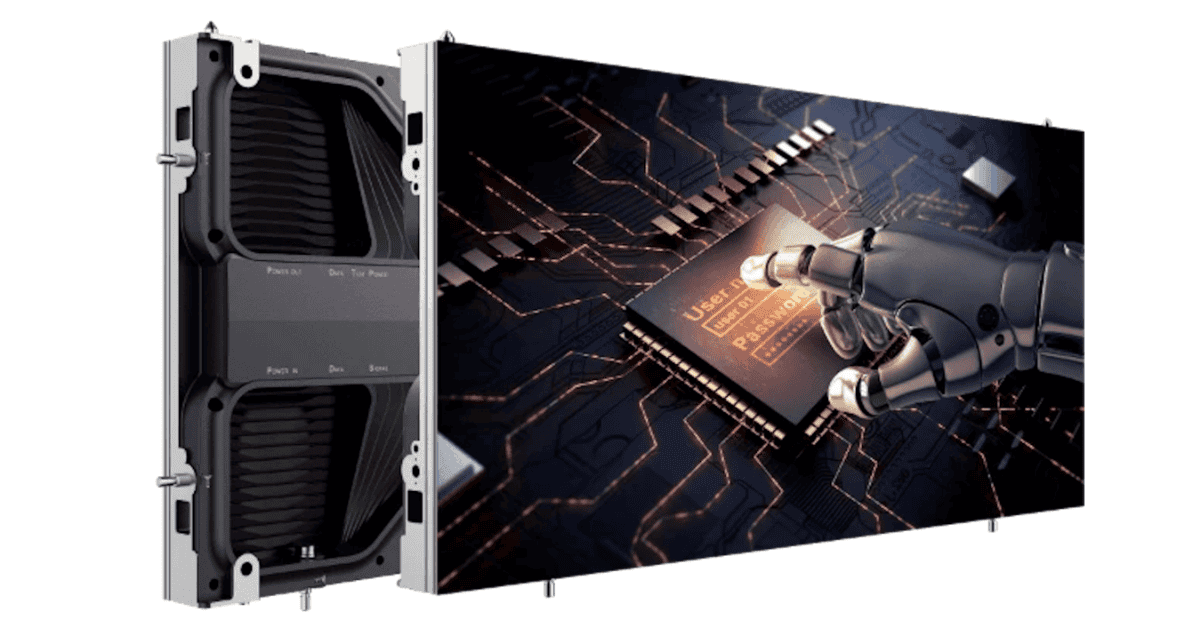
The ingenious design approach of LED walls lies in their modular construction. The individual SMDs are first combined into the next larger unit of LED modules, which in turn are grouped into so-called cabinets [2].

These cabinets fit seamlessly together to form a large, homogeneous wall, enabling not only classic rectangular formats but also creative installations [2]. With flexible cabinets, even stairway and corner installations, curved walls, or impressive ceiling installations are possible [1]. The entire structure is also easy to maintain – individual modules can be replaced if needed without disassembling the entire display [3].

Important Terms Explained Simply: Pixel Pitch, Nits, and Refresh Rate

To understand LED walls, you should know these three key terms:

  1. Pixel Pitch: Refers to the distance between the centers of adjacent pixels in millimeters [4]. The smaller this value, the higher the resolution and the closer a viewer can stand to the wall. A good rule of thumb: The optimal viewing distance equals approximately twice the pixel pitch in meters [2]. Current values range from 0.9 mm to 25 mm [5].
  2. Nits: The unit of measurement for brightness (cd/m²). While normal PC monitors have about 200-300 nits, indoor LED walls reach 600-1000 nits and outdoor models for direct sunlight up to 5,000 nits or more [6] [5].
  3. Refresh Rate: The image refresh rate in Hertz (Hz) determines how many times per second the image is updated. High-quality LED walls operate at refresh rates of 3,840 Hz to 7,680 Hz, which ensures absolutely flicker-free images – particularly important for video recording [2] [7].

The Most Important Selection Criteria for Your LED Wall
__wf_reserved_inherit

Anyone who wants to buy or rent an LED wall faces a variety of important decisions. The right choice not only saves costs but also ensures optimal visual results. What factors should you particularly consider?

Indoor vs. Outdoor: Which LED Wall Fits Your Location?

The location of use significantly determines what type of LED wall you need. Outdoor LED walls must have significantly higher brightness values of 5,000–10,000 nits to withstand direct sunlight, while 600–1,500 nits is sufficient for indoor displays [8]. Additionally, outdoor installations require waterproof enclosures with IP65 certification for complete protection against dust and water, in contrast to IP20 rating for indoor displays [8].

Also note: Outdoor LED walls incur 15-25% higher operating costs due to specialized maintenance [8] and must be equipped with reinforced steel structures and deep foundations to withstand wind speeds exceeding 100 mph [8].

Pixel Pitch Selection: Viewing Distance is Key

The pixel spacing (pixel pitch) significantly determines image quality and optimal viewing distance. In general: The smaller the pixel spacing, the higher the resolution and the shorter the acceptable viewing distance [9].

A practical rule of thumb: The optimal viewing distance equals approximately 2 times the pixel spacing in meters [5]. For a P2 LED wall, the comfortable viewing distance is approximately 2.5-3.5 meters, while a P6.67 wall can be optimally perceived from a distance of 11.47 meters or more [5].

Brightness and Contrast: Keeping Your Content Visible

Brightness (measured in nits) is crucial for the visibility of your content under different lighting conditions. An indoor video wall with 1000 nits is well suited for areas with lots of ambient light such as shopping centers or trade shows [5]. For outdoor events or sporting events, on the other hand, a wall with at least 4500 nits is recommended [5].

In addition to brightness, contrast ratio also plays an important role. Outdoor displays need a contrast ratio of approximately 5,000:1 (compared to 1,200:1 for indoor applications) to deliver a clear image even under difficult lighting conditions [8].

Size and Format: Flexible or Standardized?

Your LED wall size must be adapted to actual physical conditions: wall width, ceiling height, available mounting structure, and safety clearances [10]. The farther spectators are from each other, the larger the LED screen should be so that content remains legible from all angles [10].

For events: One tenth of the diagonal of the event venue is considered the minimum size for the square footage of the LED wall, one fifth as the recommended size [11]. For an area of 100 x 50 m, the recommended size is approximately 22.4 m² [11].

Budget and Total Cost of Ownership: What Does an LED Wall Really Cost?

The total cost of an LED wall consists of hardware, software, installation, and ongoing expenses. Per square meter, hardware costs range between 1,500€ and 5,000€ – depending on the technology [12]. Outdoor LED walls are approximately 20–30% more expensive than indoor models due to their IP65 certification [12].

Don't forget the operating costs: Modern LED walls consume approximately 300–500 watts/m², which at 8 hours daily operation of a 10 m² wall results in monthly electricity costs of approximately 150–250€ [12]. Add to this annual maintenance costs of 5–10% of hardware costs [12].

Book a free consultation today to determine the optimal LED wall configuration for your specific requirements and avoid hidden cost traps.

Technical Features of Modern LED Walls 2026

Technical innovations are pushing LED wall technology to completely new dimensions in 2026. What was once considered an energy hog now presents itself as an efficient display solution with impressive features.

Energy Efficiency: Common Cathode and Power-Saving Solutions

The revolutionary "Common Cathode" technology supplies each red, green, and blue diode with precisely tuned voltage. Unlike the conventional "Common Anode" method this approach reduces heat generation by 20-50% and reduces power consumption by impressive 20-40% [3]. The result? Modern LED walls not only achieve 40% higher brightness at lower energy consumption but also enable fan-free operation [3]. Some models consume even up to 50% less energy at the same brightness [13].

Maintenance and Lifespan: Front Service and Modular Replacement

High-quality LED walls now achieve operating times of 100,000 hours – that's more than 11 years of 24/7 operation [1]. However, lifespan is considered achieved when brightness drops to 50% of the original value [1].

One of the most practical innovations is front service access. This allows you to replace defective modules directly from the front without accessing the back of the wall. Particularly for wall installations without rear access, a real game-changer! Depending on the model, different mounting techniques are used:

  • Magnetic mounting: Fast tool-free replacement with one hand [14]
  • Front screws: Higher stability for outdoor applications [14]
  • Rotary lock quick mechanism: Combination of speed and stability [14]

Control and Content Management: From Cloud to On-Site

Modern content management systems (CMS) form the heart of every professional LED wall installation. With these systems, you easily create, edit, and schedule content through user-friendly templates and drag-and-drop editors [15]. The CMS even allow real-time editing and cross-team collaboration [15].

Particularly practical: Remote monitoring and control. Online dashboards show your display performance in real-time, while you can update content or troubleshoot issues from anywhere with an internet connection [15].

Integration into Existing Systems: HDMI, SDI, and Network Connection

For an image to appear on an LED wall, the signal goes through a clearly structured chain. From the source device (laptop, camera, playback device), the signal reaches the controller, which prepares it for the LED modules [2]. Typical connections are:

  • HDMI: Widely used, ideal for laptops or media players
  • DisplayPort: Higher refresh rates and resolutions
  • SDI: Standard in broadcast for long cable runs
  • Fiber optic: For very long distances with highest signal quality [2]

The controller takes on important image processing functions such as scaling, cropping, and brightness adjustment – everything to ensure your content displays optimally on the wall [2].

Use Cases: Where LED Walls Create Real Added Value
__wf_reserved_inherit

The versatility of modern LED walls opens up numerous fields of application where they provide real added value. Through the combination of brightness, contrast, and modular construction, they transform virtually any space into an impressive communication platform.

Events and Events: Flexible, Portable, Impressive

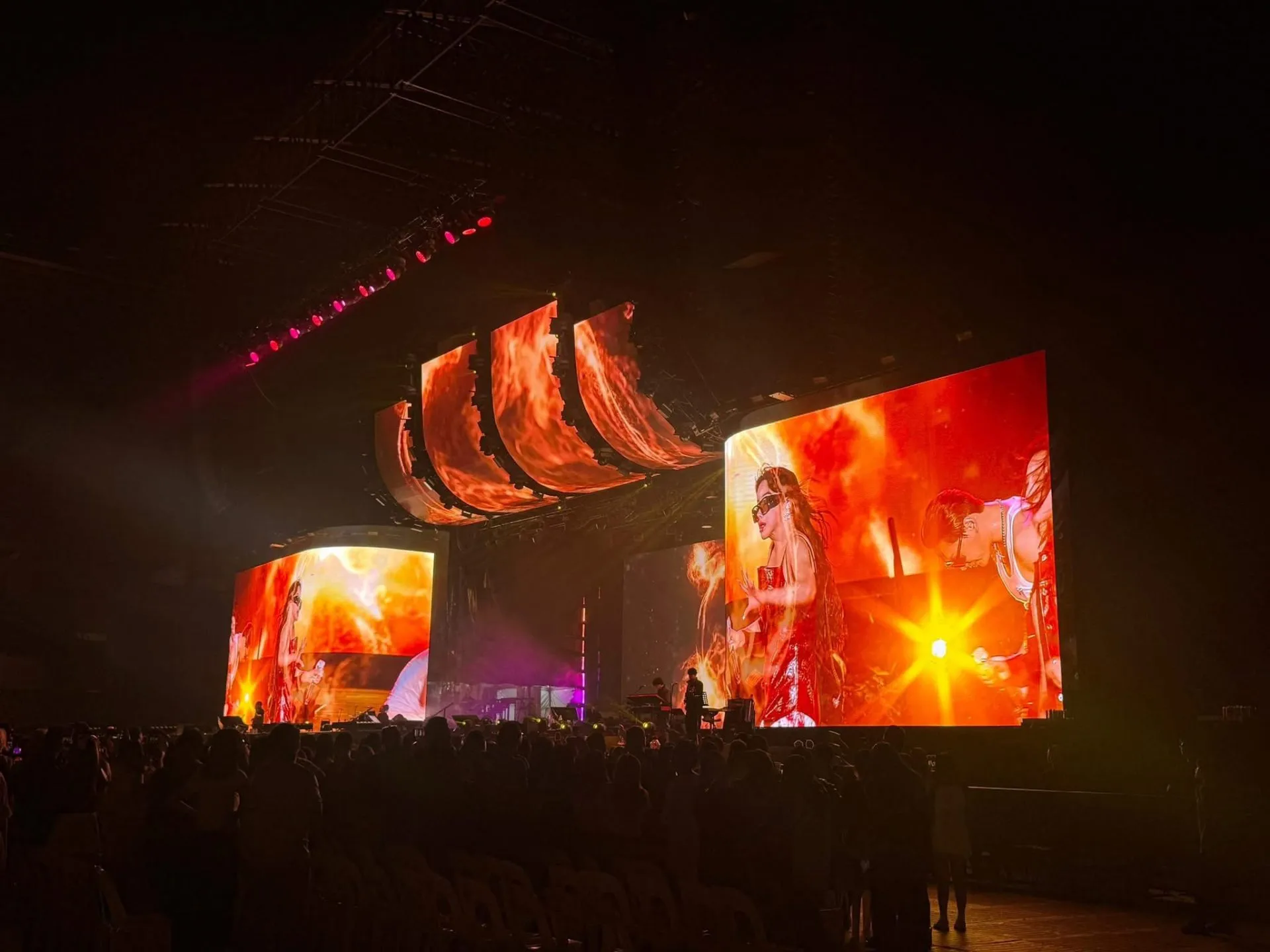
LED walls have become an indispensable technology in the live entertainment sector. Particularly practical: Their portable and lightweight construction allows them to be easily transported from place to place [6]. For concerts, events, and outdoor performances, flexible modules offer maximum design freedom [16]. Compared to previously used LCD displays or projectors, modern LED walls create much larger and brighter image surfaces that attract visitor attention far more effectively [6].

Churches and Community Centers: Design Worship Emotionally

In houses of worship, LED screens create a more intense religious experience. Compared to conventional projectors, they deliver brighter and clearer images even in strong lighting conditions [17]. They are ideal for displaying song lyrics, Bible verses, and live camera feeds [17]. The impressive visual presentation awakens emotions and noticeably enriches the worship experience [18]. In fact, many churches are now adopting this technology, including well-known congregations such as Hillsong in Australia [18].

Corporate Environments and Reception Areas: Modern Communication in the Foyer

An LED wall in the reception area serves as your company's business card. Particularly in bright lobbies, the bright, high-contrast images come into their own perfectly and are clearly visible from every angle [19]. With this technology, you impressively communicate your company messages and values to employees and visitors [19]. Furthermore, you bring corporate presentations and video conferences to life with unparalleled clarity [19].

Trade Shows and Exhibitions: Attention Guaranteed

At trade shows, first impressions often decide. A trade show LED wall clearly distinguishes your booth while providing an impressive background [20]. Unlike plain logos, it transforms your presence into a real eye-catcher [20]. Various industries take advantage of these benefits: technology trade shows for software demos, automotive shows for 360-degree vehicle views, or health trade shows for medical training videos [21]. Additionally, setup and breakdown usually takes only a few minutes [20].

Retail and Store Windows: Magnetically Attract Customers

LED walls in retail draw customer eyes magnetically and significantly increase your visibility [22]. As an eye-catcher in the display window, they draw the attention of passersby and pull them into the store [22]. Particularly advantageous: Advertising remains visible around the clock – even after closing and during dark winter months [4]. With dynamically changing content, you can respond directly to customer inquiries and present current offers, which significantly encourages impulse purchases [22].

Practical Implementation: From Planning to Installation

The path to your own LED wall leads through five decisive stages. With proper preparation, your project is guaranteed to be a success!

Needs Analysis: Questions You Should Ask Yourself

Before purchasing your LED wall, you must clarify fundamental factors: Where will it be located? How large should it be? What will it display? What's your budget? These answers significantly determine the technical requirements and pixel spacing.

Selecting a Provider: What You Should Look For

When choosing the right LED wall manufacturer, three factors count: First, reputation and references; second, transparent pricing in comparison; and third, actual product quality. Pay attention to providers with comprehensive support and clear warranty terms (3-5 years). Book a free consultation today to compare different offers.

Installation and Commissioning: How Everything Runs Smoothly

Professional installation includes mounting, cabling, calibration, and training. Pay particular attention to wall load capacity, reliable power supply, and maintenance accessibility.

Training and Support: So Your Team Can Get Started

Many manufacturers offer free training for customers. Trained teams demonstrably have 45% fewer service problems caused by operating errors.

Maintenance and Care: Ensure Perfect Image Quality Long-Term

Regular cleaning with anti-static microfiber cloths or ESD brushes keeps your LED wall in top condition. Avoid liquids that could damage electronic components.

Conclusion

LED walls have undoubtedly established themselves as a pioneering technology for visual communication. In fact, these impressive displays combine numerous advantages that far surpass conventional display solutions: unmatched brightness even in daylight, modular construction for creative installations, and a lifespan of over 100,000 operating hours that is unparalleled.

Particularly noteworthy is the development of energy efficiency. Thanks to innovative technologies such as Common Cathode, modern LED walls consume up to 50% less power than their predecessors – savings that are directly reflected in your operating costs. At the same time, they deliver impressive visual results that guarantee your message will shine through.

However, selecting the right LED wall depends on various factors. First, the location must be clearly defined – indoor or outdoor? Next, you need to determine the appropriate pixel pitch, which in turn depends on typical viewing distance. Additionally, factors such as brightness, format, and of course available budget play a crucial role.

Regardless of the application – whether in churches, corporate events, trade shows, or retail – LED walls transform spaces into impressive experience centers. They attract attention, convey messages emotionally, and create lasting impressions.

The path to your own LED wall is not complicated with proper planning. A thorough needs analysis, selection of a trustworthy provider, and professional installation form the foundation for years of trouble-free operation. Don't forget that regular maintenance and care can additionally extend the lifespan of your investment.

Ready to take your communication to the next level? Schedule a free consultation today and discover which LED wall solution perfectly matches your individual requirements. Our experts will guide you from initial concept through final installation – so your messages are guaranteed to be shown in the right light.

FAQs

Q1. How do LED walls differ from conventional displays? LED walls consist of self-luminous pixels, offer better image quality, higher brightness, larger viewing angles, and longer lifespan compared to LCD displays. They also enable more flexible sizes and formats.

Q2. What does the term "pixel pitch" mean for LED walls? Pixel pitch refers to the distance between the centers of adjacent pixels in millimeters. A smaller value means higher resolution and enables shorter viewing distances. The optimal viewing distance equals approximately twice the pixel pitch in meters.

Q3. What advantages do LED walls offer for events and shows? LED walls are flexible, portable, and impressive. They create larger and brighter image surfaces than conventional displays, attract visitor attention better, and can be easily transported from place to place.

Q4. How energy-efficient are modern LED walls? Modern LED walls are very energy-efficient. Technologies such as "Common Cathode" reduce power consumption by 20-40% while increasing brightness by up to 40%. Some models even consume up to 50% less energy at the same brightness.

Q5. What should be considered when maintaining an LED wall? Regular cleaning with anti-static microfiber cloths or ESD brushes is important. Liquids should be avoided to prevent damage to electronic components. Many modern LED walls offer front service access for easy module replacement. Professional maintenance can extend the lifespan of the installation.

References

[1] - https://www.reissopto.com/de/led-faq/led-display-lifespan-and-maintenance-guide.html
[2] - https://www.led-tek.de/2025/09/wie-wird-eine-led-wand-angesteuert/
[3] - https://www.silicon-core.com/news/common-cathode-led-technology
[4] - https://www.vkf-renzel.de/led-schaufensterwerbung/
[5] - https://www.wild-videowalls.de/led-videowand-faq?srsltid=AfmBOorcWbhbVq4gzL9sXgDp6xFel-3N9wvFY29a8oBSE5nPOB_IB6Xm
[6] - https://visualled.com/de/bereiche/led-wand-veranstaltungstechnik/
[7] - https://www.led-tek.de/indoor-led-wand-neo-serie/
[8] - https://www.hxtech-led.com/de/blog/indoor-vs-outdoor-led-billboard-whats-the-difference
[9] - https://ngweb2.deset.de/led-video-display-betrachtungsabstand/
[10] - https://viboled.com/de/LED-Wandgröße/
[11] - https://www.stadionwelt.de/fachwissen/20846/wie-gross-muss-eine-videowall-sein
[12] - https://www.pixelshark.de/finanzen/led-wand-kosten/
[13] - https://www.ledall.de/assets/commencathode.pdf
[14] - https://cob-leddisplay.com/de/front-service-led-anzeigemodul/
[15] - https://www.szlightall.com/de/a-content-management-systems-for-led-display-networks.html
[16] - https://showmatrix.de/led-wand/
[17] - https://viboled.com/de/LED-Wände-für-Kirchen/
[18] - https://www.kampro-church.com/ledwand
[19] - https://pro.sony/de_DE/products/pro-displays/led-video-walls-corporate-displays
[20] - https://www.hessen-display.com/led-messewand.html
[21] - https://www.konorg.com/led-messewand/
[22] - https://www.xplace-group.com/produkte/digital-signage/led-wand/
Cta V3 Bild
Artikel von

Kampro

Blog-Share-SymbolBlog-Share-SymbolBlog-Share-Symbol
Share on:
Blog Share IconBlog Share IconBlog Share IconBlog Share Icon

The global digital signage market, which includes LED walls, is growing continuously at an annual rate of 4.6% and is expected to reach over 14 billion USD by 2031. Are you familiar with the problem when important presentations or information don't get the attention they deserve? This problem is now a thing of the past with modern LED walls.

LED walls transform spaces into impressive experience centers while offering decisive advantages over conventional displays. Modern LEDs consume up to 50% less power than previous generations and are even more powerful. In fact, LED displays in 2026 easily achieve 6,000 to 10,000 nits, which means they remain perfectly visible even in direct sunlight. Additionally, professional LED displays are designed for an impressive lifespan of 100,000 hours – that's more than 11 years of continuous operation.

In this comprehensive guide, we explain everything you need to know about LED walls in 2026. We examine how they work, important selection criteria, technical innovations, and diverse applications. This gives you the knowledge needed to find the right LED wall solution for your specific requirements – whether for corporate environments, events, or public spaces.

Key Takeaways

LED walls revolutionize visual communication in 2026 through self-luminous pixels, modular construction, and impressive energy efficiency. Here are the most important insights for your purchasing decision:

Pixel pitch determines viewing distance: Optimal distance = 2x pixel pitch in meters (P2 = 2-3m, P6.67 = 11m)

Common cathode saves 20-40% energy: Modern LED walls consume up to 50% less power at higher brightness

Indoor needs 600-1500 nits, outdoor 5000-10000 nits: Brightness must be adapted to lighting conditions

100,000 hours lifespan: Equals 11+ years of continuous operation – significantly longer than LCD displays (40,000h)

Modular construction enables front service: Defective modules can be replaced from the front without needing rear access

Total costs: 1,500-5,000€/m² plus operation: Hardware costs vary depending on technology, outdoor 20-30% more expensive

The right LED wall selection depends on the location, viewing distance, and budget. Professional consulting helps avoid hidden cost traps and find the optimal solution for your specific requirements.

What is an LED Wall and How Does it Work?

__wf_reserved_inherit

An LED wall is one of the most modern display technologies we know today. But what exactly is behind this term? Essentially, it is a large-format display made up of many individual light-emitting diodes. This technology offers impressive visual results and versatile applications.

Basic Principle: Self-Luminous Pixels Instead of Backlighting

Unlike conventional LCD displays, which use permanent backlighting, LED walls operate on a completely different principle. In an LED wall, each individual picture element is self-luminous. These pixels consist of tiny light-emitting diodes arranged in the form of so-called SMDs (Surface-Mount Diodes) [1]. Each pixel is formed by the combination of red, green, and blue diodes, which together can represent the complete color spectrum.

The decisive advantage: If an area is supposed to appear black, the LEDs are completely switched off – power consumption drops to zero and the black level is absolutely [2]. With conventional LCDs, on the other hand, the backlighting remains active, which often results in milky gray instead of deep black.

Difference Between LED Wall and Conventional Displays

LED walls distinguish themselves in several important ways from classic displays:

  1. Image Quality: The combination of unique brightness and contrast values (often 10,000:1), authentic black, and glare-free image surface significantly surpasses conventional video walls [1].
  2. Viewing Angle: The angle at which images can be perceived in high quality extends to nearly 180° – significantly more than LCD displays [1].
  3. Lifespan: LED walls can achieve an impressive lifespan of up to 100,000 operating hours in 24/7 operation – significantly more than the average lifespan of an LCD display (about 40,000 hours) [1].
  4. Size and Format: While LCD displays are typically limited to about 100 inches screen diagonal and are inflexible in installation, LED walls easily enable diagonals of over 130 inches and are not restricted to the classic 16:9 format [1] [2].

Modular Construction: LED Wall Panels as Building Blocks

The ingenious design approach of LED walls lies in their modular construction. The individual SMDs are first combined into the next larger unit of LED modules, which in turn are grouped into so-called cabinets [2].

These cabinets fit seamlessly together to form a large, homogeneous wall, enabling not only classic rectangular formats but also creative installations [2]. With flexible cabinets, even stairway and corner installations, curved walls, or impressive ceiling installations are possible [1]. The entire structure is also easy to maintain – individual modules can be replaced if needed without disassembling the entire display [3].

Important Terms Explained Simply: Pixel Pitch, Nits, and Refresh Rate

To understand LED walls, you should know these three key terms:

  1. Pixel Pitch: Refers to the distance between the centers of adjacent pixels in millimeters [4]. The smaller this value, the higher the resolution and the closer a viewer can stand to the wall. A good rule of thumb: The optimal viewing distance equals approximately twice the pixel pitch in meters [2]. Current values range from 0.9 mm to 25 mm [5].
  2. Nits: The unit of measurement for brightness (cd/m²). While normal PC monitors have about 200-300 nits, indoor LED walls reach 600-1000 nits and outdoor models for direct sunlight up to 5,000 nits or more [6] [5].
  3. Refresh Rate: The image refresh rate in Hertz (Hz) determines how many times per second the image is updated. High-quality LED walls operate at refresh rates of 3,840 Hz to 7,680 Hz, which ensures absolutely flicker-free images – particularly important for video recording [2] [7].

The Most Important Selection Criteria for Your LED Wall

__wf_reserved_inherit

Anyone who wants to buy or rent an LED wall faces a variety of important decisions. The right choice not only saves costs but also ensures optimal visual results. What factors should you particularly consider?

Indoor vs. Outdoor: Which LED Wall Fits Your Location?

The location of use significantly determines what type of LED wall you need. Outdoor LED walls must have significantly higher brightness values of 5,000–10,000 nits to withstand direct sunlight, while 600–1,500 nits is sufficient for indoor displays [8]. Additionally, outdoor installations require waterproof enclosures with IP65 certification for complete protection against dust and water, in contrast to IP20 rating for indoor displays [8].

Also note: Outdoor LED walls incur 15-25% higher operating costs due to specialized maintenance [8] and must be equipped with reinforced steel structures and deep foundations to withstand wind speeds exceeding 100 mph [8].

Pixel Pitch Selection: Viewing Distance is Key

The pixel spacing (pixel pitch) significantly determines image quality and optimal viewing distance. In general: The smaller the pixel spacing, the higher the resolution and the shorter the acceptable viewing distance [9].

A practical rule of thumb: The optimal viewing distance equals approximately 2 times the pixel spacing in meters [5]. For a P2 LED wall, the comfortable viewing distance is approximately 2.5-3.5 meters, while a P6.67 wall can be optimally perceived from a distance of 11.47 meters or more [5].

Brightness and Contrast: Keeping Your Content Visible

Brightness (measured in nits) is crucial for the visibility of your content under different lighting conditions. An indoor video wall with 1000 nits is well suited for areas with lots of ambient light such as shopping centers or trade shows [5]. For outdoor events or sporting events, on the other hand, a wall with at least 4500 nits is recommended [5].

In addition to brightness, contrast ratio also plays an important role. Outdoor displays need a contrast ratio of approximately 5,000:1 (compared to 1,200:1 for indoor applications) to deliver a clear image even under difficult lighting conditions [8].

Size and Format: Flexible or Standardized?

Your LED wall size must be adapted to actual physical conditions: wall width, ceiling height, available mounting structure, and safety clearances [10]. The farther spectators are from each other, the larger the LED screen should be so that content remains legible from all angles [10].

For events: One tenth of the diagonal of the event venue is considered the minimum size for the square footage of the LED wall, one fifth as the recommended size [11]. For an area of 100 x 50 m, the recommended size is approximately 22.4 m² [11].

Budget and Total Cost of Ownership: What Does an LED Wall Really Cost?

The total cost of an LED wall consists of hardware, software, installation, and ongoing expenses. Per square meter, hardware costs range between 1,500€ and 5,000€ – depending on the technology [12]. Outdoor LED walls are approximately 20–30% more expensive than indoor models due to their IP65 certification [12].

Don't forget the operating costs: Modern LED walls consume approximately 300–500 watts/m², which at 8 hours daily operation of a 10 m² wall results in monthly electricity costs of approximately 150–250€ [12]. Add to this annual maintenance costs of 5–10% of hardware costs [12].

Book a free consultation today to determine the optimal LED wall configuration for your specific requirements and avoid hidden cost traps.

Technical Features of Modern LED Walls 2026

Technical innovations are pushing LED wall technology to completely new dimensions in 2026. What was once considered an energy hog now presents itself as an efficient display solution with impressive features.

Energy Efficiency: Common Cathode and Power-Saving Solutions

The revolutionary "Common Cathode" technology supplies each red, green, and blue diode with precisely tuned voltage. Unlike the conventional "Common Anode" method this approach reduces heat generation by 20-50% and reduces power consumption by impressive 20-40% [3]. The result? Modern LED walls not only achieve 40% higher brightness at lower energy consumption but also enable fan-free operation [3]. Some models consume even up to 50% less energy at the same brightness [13].

Maintenance and Lifespan: Front Service and Modular Replacement

High-quality LED walls now achieve operating times of 100,000 hours – that's more than 11 years of 24/7 operation [1]. However, lifespan is considered achieved when brightness drops to 50% of the original value [1].

One of the most practical innovations is front service access. This allows you to replace defective modules directly from the front without accessing the back of the wall. Particularly for wall installations without rear access, a real game-changer! Depending on the model, different mounting techniques are used:

  • Magnetic mounting: Fast tool-free replacement with one hand [14]
  • Front screws: Higher stability for outdoor applications [14]
  • Rotary lock quick mechanism: Combination of speed and stability [14]

Control and Content Management: From Cloud to On-Site

Modern content management systems (CMS) form the heart of every professional LED wall installation. With these systems, you easily create, edit, and schedule content through user-friendly templates and drag-and-drop editors [15]. The CMS even allow real-time editing and cross-team collaboration [15].

Particularly practical: Remote monitoring and control. Online dashboards show your display performance in real-time, while you can update content or troubleshoot issues from anywhere with an internet connection [15].

Integration into Existing Systems: HDMI, SDI, and Network Connection

For an image to appear on an LED wall, the signal goes through a clearly structured chain. From the source device (laptop, camera, playback device), the signal reaches the controller, which prepares it for the LED modules [2]. Typical connections are:

  • HDMI: Widely used, ideal for laptops or media players
  • DisplayPort: Higher refresh rates and resolutions
  • SDI: Standard in broadcast for long cable runs
  • Fiber optic: For very long distances with highest signal quality [2]

The controller takes on important image processing functions such as scaling, cropping, and brightness adjustment – everything to ensure your content displays optimally on the wall [2].

Use Cases: Where LED Walls Create Real Added Value

__wf_reserved_inherit

The versatility of modern LED walls opens up numerous fields of application where they provide real added value. Through the combination of brightness, contrast, and modular construction, they transform virtually any space into an impressive communication platform.

Events and Events: Flexible, Portable, Impressive

LED walls have become an indispensable technology in the live entertainment sector. Particularly practical: Their portable and lightweight construction allows them to be easily transported from place to place [6]. For concerts, events, and outdoor performances, flexible modules offer maximum design freedom [16]. Compared to previously used LCD displays or projectors, modern LED walls create much larger and brighter image surfaces that attract visitor attention far more effectively [6].

Churches and Community Centers: Design Worship Emotionally

In houses of worship, LED screens create a more intense religious experience. Compared to conventional projectors, they deliver brighter and clearer images even in strong lighting conditions [17]. They are ideal for displaying song lyrics, Bible verses, and live camera feeds [17]. The impressive visual presentation awakens emotions and noticeably enriches the worship experience [18]. In fact, many churches are now adopting this technology, including well-known congregations such as Hillsong in Australia [18].

Corporate Environments and Reception Areas: Modern Communication in the Foyer

An LED wall in the reception area serves as your company's business card. Particularly in bright lobbies, the bright, high-contrast images come into their own perfectly and are clearly visible from every angle [19]. With this technology, you impressively communicate your company messages and values to employees and visitors [19]. Furthermore, you bring corporate presentations and video conferences to life with unparalleled clarity [19].

Trade Shows and Exhibitions: Attention Guaranteed

At trade shows, first impressions often decide. A trade show LED wall clearly distinguishes your booth while providing an impressive background [20]. Unlike plain logos, it transforms your presence into a real eye-catcher [20]. Various industries take advantage of these benefits: technology trade shows for software demos, automotive shows for 360-degree vehicle views, or health trade shows for medical training videos [21]. Additionally, setup and breakdown usually takes only a few minutes [20].

Retail and Store Windows: Magnetically Attract Customers

LED walls in retail draw customer eyes magnetically and significantly increase your visibility [22]. As an eye-catcher in the display window, they draw the attention of passersby and pull them into the store [22]. Particularly advantageous: Advertising remains visible around the clock – even after closing and during dark winter months [4]. With dynamically changing content, you can respond directly to customer inquiries and present current offers, which significantly encourages impulse purchases [22].

Practical Implementation: From Planning to Installation

The path to your own LED wall leads through five decisive stages. With proper preparation, your project is guaranteed to be a success!

Needs Analysis: Questions You Should Ask Yourself

Before purchasing your LED wall, you must clarify fundamental factors: Where will it be located? How large should it be? What will it display? What's your budget? These answers significantly determine the technical requirements and pixel spacing.

Selecting a Provider: What You Should Look For

When choosing the right LED wall manufacturer, three factors count: First, reputation and references; second, transparent pricing in comparison; and third, actual product quality. Pay attention to providers with comprehensive support and clear warranty terms (3-5 years). Book a free consultation today to compare different offers.

Installation and Commissioning: How Everything Runs Smoothly

Professional installation includes mounting, cabling, calibration, and training. Pay particular attention to wall load capacity, reliable power supply, and maintenance accessibility.

Training and Support: So Your Team Can Get Started

Many manufacturers offer free training for customers. Trained teams demonstrably have 45% fewer service problems caused by operating errors.

Maintenance and Care: Ensure Perfect Image Quality Long-Term

Regular cleaning with anti-static microfiber cloths or ESD brushes keeps your LED wall in top condition. Avoid liquids that could damage electronic components.

Conclusion

LED walls have undoubtedly established themselves as a pioneering technology for visual communication. In fact, these impressive displays combine numerous advantages that far surpass conventional display solutions: unmatched brightness even in daylight, modular construction for creative installations, and a lifespan of over 100,000 operating hours that is unparalleled.

Particularly noteworthy is the development of energy efficiency. Thanks to innovative technologies such as Common Cathode, modern LED walls consume up to 50% less power than their predecessors – savings that are directly reflected in your operating costs. At the same time, they deliver impressive visual results that guarantee your message will shine through.

However, selecting the right LED wall depends on various factors. First, the location must be clearly defined – indoor or outdoor? Next, you need to determine the appropriate pixel pitch, which in turn depends on typical viewing distance. Additionally, factors such as brightness, format, and of course available budget play a crucial role.

Regardless of the application – whether in churches, corporate events, trade shows, or retail – LED walls transform spaces into impressive experience centers. They attract attention, convey messages emotionally, and create lasting impressions.

The path to your own LED wall is not complicated with proper planning. A thorough needs analysis, selection of a trustworthy provider, and professional installation form the foundation for years of trouble-free operation. Don't forget that regular maintenance and care can additionally extend the lifespan of your investment.

Ready to take your communication to the next level? Schedule a free consultation today and discover which LED wall solution perfectly matches your individual requirements. Our experts will guide you from initial concept through final installation – so your messages are guaranteed to be shown in the right light.

FAQs

Q1. How do LED walls differ from conventional displays? LED walls consist of self-luminous pixels, offer better image quality, higher brightness, larger viewing angles, and longer lifespan compared to LCD displays. They also enable more flexible sizes and formats.

Q2. What does the term "pixel pitch" mean for LED walls? Pixel pitch refers to the distance between the centers of adjacent pixels in millimeters. A smaller value means higher resolution and enables shorter viewing distances. The optimal viewing distance equals approximately twice the pixel pitch in meters.

Q3. What advantages do LED walls offer for events and shows? LED walls are flexible, portable, and impressive. They create larger and brighter image surfaces than conventional displays, attract visitor attention better, and can be easily transported from place to place.

Q4. How energy-efficient are modern LED walls? Modern LED walls are very energy-efficient. Technologies such as "Common Cathode" reduce power consumption by 20-40% while increasing brightness by up to 40%. Some models even consume up to 50% less energy at the same brightness.

Q5. What should be considered when maintaining an LED wall? Regular cleaning with anti-static microfiber cloths or ESD brushes is important. Liquids should be avoided to prevent damage to electronic components. Many modern LED walls offer front service access for easy module replacement. Professional maintenance can extend the lifespan of the installation.

References

[1] - https://www.reissopto.com/de/led-faq/led-display-lifespan-and-maintenance-guide.html
[2] - https://www.led-tek.de/2025/09/wie-wird-eine-led-wand-angesteuert/
[3] - https://www.silicon-core.com/news/common-cathode-led-technology
[4] - https://www.vkf-renzel.de/led-schaufensterwerbung/
[5] - https://www.wild-videowalls.de/led-videowand-faq?srsltid=AfmBOorcWbhbVq4gzL9sXgDp6xFel-3N9wvFY29a8oBSE5nPOB_IB6Xm
[6] - https://visualled.com/de/bereiche/led-wand-veranstaltungstechnik/
[7] - https://www.led-tek.de/indoor-led-wand-neo-serie/
[8] - https://www.hxtech-led.com/de/blog/indoor-vs-outdoor-led-billboard-whats-the-difference
[9] - https://ngweb2.deset.de/led-video-display-betrachtungsabstand/
[10] - https://viboled.com/de/LED-Wandgröße/
[11] - https://www.stadionwelt.de/fachwissen/20846/wie-gross-muss-eine-videowall-sein
[12] - https://www.pixelshark.de/finanzen/led-wand-kosten/
[13] - https://www.ledall.de/assets/commencathode.pdf
[14] - https://cob-leddisplay.com/de/front-service-led-anzeigemodul/
[15] - https://www.szlightall.com/de/a-content-management-systems-for-led-display-networks.html
[16] - https://showmatrix.de/led-wand/
[17] - https://viboled.com/de/LED-Wände-für-Kirchen/
[18] - https://www.kampro-church.com/ledwand
[19] - https://pro.sony/de_DE/products/pro-displays/led-video-walls-corporate-displays
[20] - https://www.hessen-display.com/led-messewand.html
[21] - https://www.konorg.com/led-messewand/
[22] - https://www.xplace-group.com/produkte/digital-signage/led-wand/
Cta V3 Image
Article by

Kampro

Blog Share IconBlog Share IconBlog Share Icon